Meta Description: From reading X-rays to predicting illness before symptoms appear, AI is changing how diseases are diagnosed. Here’s how it’s actually being used in hospitals today.
Walk into almost any major hospital today, and somewhere in the background, an AI system is quietly at work — scanning an image, flagging an abnormal test result, or helping a doctor decide what to check next. This isn’t a glimpse into some distant future of medicine. It’s already happening, and it’s reshaping how diseases are caught, understood, and treated.
For decades, diagnosis relied almost entirely on a doctor’s training, experience, and a fair amount of time-consuming manual review. Now, artificial intelligence is stepping in as a second set of eyes — one that never gets tired, never loses focus, and can process patterns across millions of cases in a way no single human ever could.
Why Diagnosis Is Such a Hard Problem to Begin With
Diagnosing disease has always been one of medicine’s biggest challenges. Symptoms often overlap between conditions, early-stage diseases can be nearly invisible on a scan, and even experienced doctors can miss subtle warning signs, especially when they’re reviewing hundreds of cases a week.
This is exactly the kind of problem AI is well-suited to help with. Machine learning models can be trained on huge datasets of medical images, patient histories, and lab results, learning to recognize patterns that are difficult for the human eye to catch consistently.
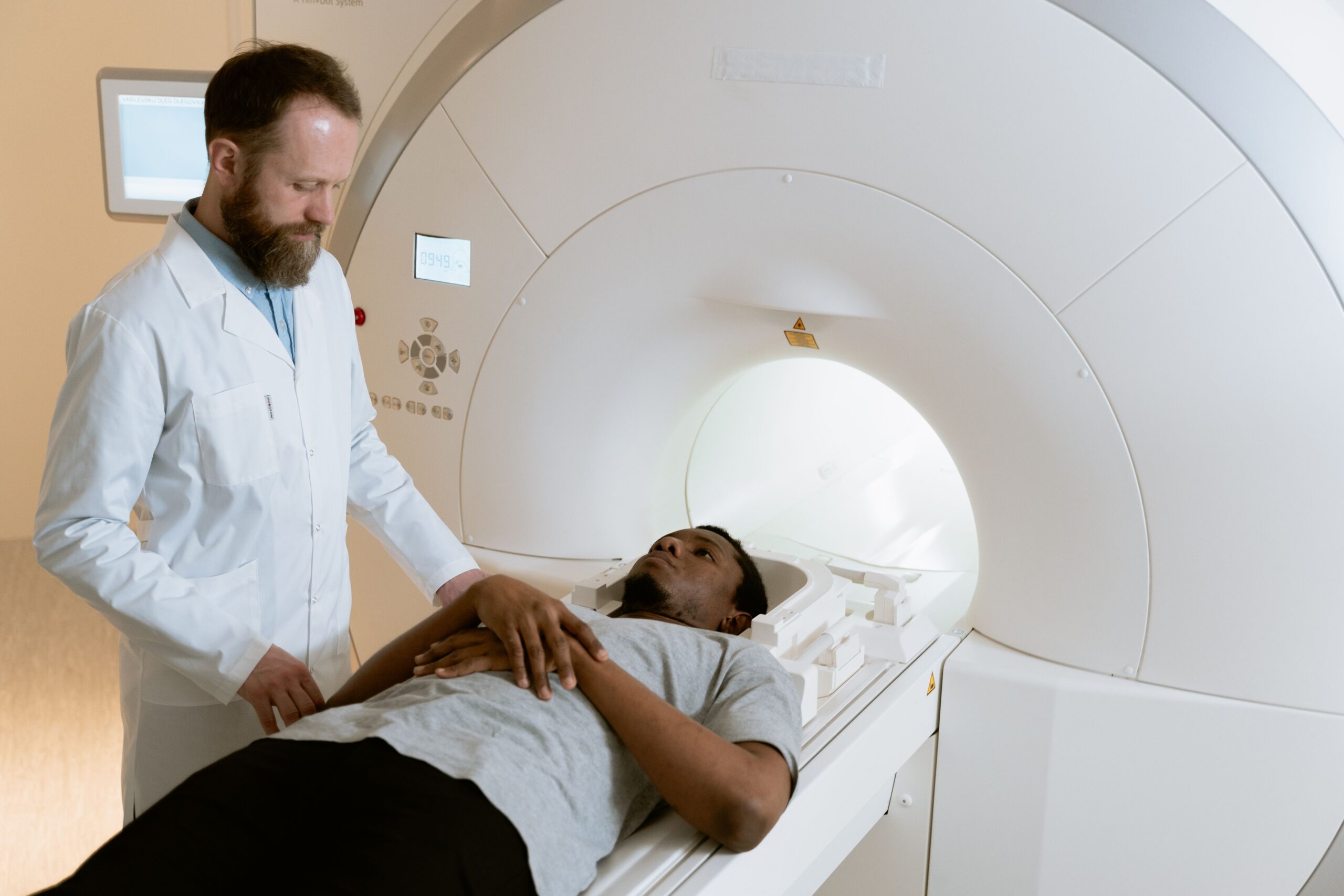
AI Reading Medical Scans
One of the clearest examples of AI in healthcare is medical imaging. Radiologists have long reviewed X-rays, CT scans, and MRIs to detect issues like tumors, fractures, or internal bleeding. Today, AI tools are trained to do the same — and in many studies, they’ve matched or even outperformed human radiologists in detecting specific conditions.
A few real examples of this in practice:
- AI models can detect early signs of breast cancer in mammograms, sometimes spotting tumors before they’re visible to the human eye.
- Lung cancer screening tools use AI to analyze CT scans and flag suspicious nodules for further review.
- AI-assisted diabetic retinopathy screening can detect eye damage caused by diabetes just from a retinal photo, which is especially useful in areas with limited access to eye specialists.
Importantly, these tools aren’t replacing radiologists — they’re acting as a second opinion that helps doctors catch things they might otherwise miss, especially in high-volume settings.
Predicting Illness Before Symptoms Appear
Perhaps the most exciting shift in AI-driven healthcare is the move from diagnosis to prediction. Instead of waiting for symptoms to show up, AI models can analyze patterns in a patient’s data — bloodwork, vital signs, family history, even lifestyle factors — to flag a higher risk of developing certain conditions.
For example, some hospitals now use AI systems to monitor patients in intensive care units, watching for subtle changes in heart rate, oxygen levels, and other vitals that might indicate a patient is about to deteriorate — often hours before a human would notice the same pattern. This kind of early warning can genuinely be the difference between life and death.
Speeding Up Diagnosis in Rural and Underserved Areas
One of the most underrated benefits of AI in healthcare is accessibility. In many parts of the world, there simply aren’t enough specialists to go around. A small town might not have a radiologist or a dermatologist available, which can delay diagnosis for weeks or months.
AI-powered diagnostic tools can help bridge this gap. A basic scan or photo can be analyzed by an AI system and flagged for urgent review, even in places where a specialist isn’t physically available. This doesn’t replace the need for trained doctors, but it does mean patients in remote areas can get a faster initial assessment instead of waiting indefinitely.
AI and Rare Disease Diagnosis
Rare diseases are notoriously difficult to diagnose because most doctors may only see a handful of cases — or none at all — in their entire career. Patients with rare conditions often go through what’s known as a “diagnostic odyssey,” seeing multiple specialists over several years before getting an accurate answer.
AI is starting to change this. By analyzing symptoms, genetic data, and medical history against enormous databases of known conditions, AI tools can help doctors narrow down possibilities much faster than traditional trial-and-error methods, especially for conditions that are difficult to recognize without highly specialized knowledge.
The Role of AI in Pathology and Lab Work
Beyond imaging, AI is also making an impact in pathology — the study of tissue samples to detect disease. Reviewing slides under a microscope is a slow, detail-heavy process, and AI tools are now being trained to scan digitized slides and flag areas that need closer human review.
This doesn’t just save time; it also adds a layer of consistency. Human fatigue is a real factor in diagnostic accuracy, especially for pathologists reviewing dozens of samples a day. AI doesn’t get tired, and it can apply the same level of scrutiny to the first sample and the hundredth.
Where AI Still Falls Short
Despite the progress, it’s important to be realistic about the limitations. AI diagnostic tools are only as good as the data they’re trained on. If that data lacks diversity — for example, if a skin cancer detection model was trained mostly on lighter skin tones — the tool can be significantly less accurate for other groups. This is a serious issue researchers are actively working to fix.
AI also struggles with context that goes beyond the data in front of it. A doctor considers a patient’s full history, emotional state, and circumstances in a way that current AI systems simply can’t replicate. For this reason, most healthcare systems treat AI as a decision-support tool, not a replacement for clinical judgment.
There are also real questions around accountability. If an AI tool misses a diagnosis, who is responsible — the developer, the hospital, or the doctor who reviewed the case? These are questions the healthcare industry is still working through as adoption grows.
What This Means for Patients
For everyday patients, the growing use of AI in diagnosis generally means faster results, earlier detection of serious conditions, and potentially more accurate readings of scans and tests. It also means care that scales better — a single AI system can support thousands of patients at once, something that simply isn’t possible for a human specialist working alone.
That said, it’s worth understanding that AI is a tool used alongside a doctor, not instead of one. The final decisions about diagnosis and treatment still rest with trained medical professionals who understand the bigger picture of a patient’s health.
Final Thoughts
AI’s role in disease diagnosis isn’t about replacing doctors — it’s about giving them sharper tools to work with. From reading scans faster to predicting complications before they happen, AI is helping healthcare move from reactive treatment to proactive, earlier intervention.
As the technology matures and the data it learns from becomes more representative and reliable, AI’s role in diagnosis is only going to grow. The goal isn’t a future where machines make medical decisions alone — it’s one where doctors and AI work together to catch disease earlier, treat it more effectively, and ultimately save more lives.
Meta Description: From reading X-rays to predicting illness before symptoms appear, AI is changing how diseases are diagnosed. Here’s how it’s actually being used in hospitals today.
Walk into almost any major hospital today, and somewhere in the background, an AI system is quietly at work — scanning an image, flagging an abnormal test result, or helping a doctor decide what to check next. This isn’t a glimpse into some distant future of medicine. It’s already happening, and it’s reshaping how diseases are caught, understood, and treated.
For decades, diagnosis relied almost entirely on a doctor’s training, experience, and a fair amount of time-consuming manual review. Now, artificial intelligence is stepping in as a second set of eyes — one that never gets tired, never loses focus, and can process patterns across millions of cases in a way no single human ever could.
Why Diagnosis Is Such a Hard Problem to Begin With
Diagnosing disease has always been one of medicine’s biggest challenges. Symptoms often overlap between conditions, early-stage diseases can be nearly invisible on a scan, and even experienced doctors can miss subtle warning signs, especially when they’re reviewing hundreds of cases a week.
This is exactly the kind of problem AI is well-suited to help with. Machine learning models can be trained on huge datasets of medical images, patient histories, and lab results, learning to recognize patterns that are difficult for the human eye to catch consistently.
AI Reading Medical Scans
One of the clearest examples of AI in healthcare is medical imaging. Radiologists have long reviewed X-rays, CT scans, and MRIs to detect issues like tumors, fractures, or internal bleeding. Today, AI tools are trained to do the same — and in many studies, they’ve matched or even outperformed human radiologists in detecting specific conditions.
A few real examples of this in practice:
- AI models can detect early signs of breast cancer in mammograms, sometimes spotting tumors before they’re visible to the human eye.
- Lung cancer screening tools use AI to analyze CT scans and flag suspicious nodules for further review.
- AI-assisted diabetic retinopathy screening can detect eye damage caused by diabetes just from a retinal photo, which is especially useful in areas with limited access to eye specialists.
Importantly, these tools aren’t replacing radiologists — they’re acting as a second opinion that helps doctors catch things they might otherwise miss, especially in high-volume settings.
Predicting Illness Before Symptoms Appear
Perhaps the most exciting shift in AI-driven healthcare is the move from diagnosis to prediction. Instead of waiting for symptoms to show up, AI models can analyze patterns in a patient’s data — bloodwork, vital signs, family history, even lifestyle factors — to flag a higher risk of developing certain conditions.
For example, some hospitals now use AI systems to monitor patients in intensive care units, watching for subtle changes in heart rate, oxygen levels, and other vitals that might indicate a patient is about to deteriorate — often hours before a human would notice the same pattern. This kind of early warning can genuinely be the difference between life and death.
Speeding Up Diagnosis in Rural and Underserved Areas
One of the most underrated benefits of AI in healthcare is accessibility. In many parts of the world, there simply aren’t enough specialists to go around. A small town might not have a radiologist or a dermatologist available, which can delay diagnosis for weeks or months.
AI-powered diagnostic tools can help bridge this gap. A basic scan or photo can be analyzed by an AI system and flagged for urgent review, even in places where a specialist isn’t physically available. This doesn’t replace the need for trained doctors, but it does mean patients in remote areas can get a faster initial assessment instead of waiting indefinitely.
AI and Rare Disease Diagnosis
Rare diseases are notoriously difficult to diagnose because most doctors may only see a handful of cases — or none at all — in their entire career. Patients with rare conditions often go through what’s known as a “diagnostic odyssey,” seeing multiple specialists over several years before getting an accurate answer.
AI is starting to change this. By analyzing symptoms, genetic data, and medical history against enormous databases of known conditions, AI tools can help doctors narrow down possibilities much faster than traditional trial-and-error methods, especially for conditions that are difficult to recognize without highly specialized knowledge.
The Role of AI in Pathology and Lab Work
Beyond imaging, AI is also making an impact in pathology — the study of tissue samples to detect disease. Reviewing slides under a microscope is a slow, detail-heavy process, and AI tools are now being trained to scan digitized slides and flag areas that need closer human review.
This doesn’t just save time; it also adds a layer of consistency. Human fatigue is a real factor in diagnostic accuracy, especially for pathologists reviewing dozens of samples a day. AI doesn’t get tired, and it can apply the same level of scrutiny to the first sample and the hundredth.
Where AI Still Falls Short
Despite the progress, it’s important to be realistic about the limitations. AI diagnostic tools are only as good as the data they’re trained on. If that data lacks diversity — for example, if a skin cancer detection model was trained mostly on lighter skin tones — the tool can be significantly less accurate for other groups. This is a serious issue researchers are actively working to fix.
AI also struggles with context that goes beyond the data in front of it. A doctor considers a patient’s full history, emotional state, and circumstances in a way that current AI systems simply can’t replicate. For this reason, most healthcare systems treat AI as a decision-support tool, not a replacement for clinical judgment.
There are also real questions around accountability. If an AI tool misses a diagnosis, who is responsible — the developer, the hospital, or the doctor who reviewed the case? These are questions the healthcare industry is still working through as adoption grows.
What This Means for Patients
For everyday patients, the growing use of AI in diagnosis generally means faster results, earlier detection of serious conditions, and potentially more accurate readings of scans and tests. It also means care that scales better — a single AI system can support thousands of patients at once, something that simply isn’t possible for a human specialist working alone.
That said, it’s worth understanding that AI is a tool used alongside a doctor, not instead of one. The final decisions about diagnosis and treatment still rest with trained medical professionals who understand the bigger picture of a patient’s health.
Final Thoughts
AI’s role in disease diagnosis isn’t about replacing doctors — it’s about giving them sharper tools to work with. From reading scans faster to predicting complications before they happen, AI is helping healthcare move from reactive treatment to proactive, earlier intervention.
As the technology matures and the data it learns from becomes more representative and reliable, AI’s role in diagnosis is only going to grow. The goal isn’t a future where machines make medical decisions alone — it’s one where doctors and AI work together to catch disease earlier, treat it more effectively, and ultimately save more lives
Meta Description: From reading X-rays to predicting illness before symptoms appear, AI is changing how diseases are diagnosed. Here’s how it’s actually being used in hospitals today.
Walk into almost any major hospital today, and somewhere in the background, an AI system is quietly at work — scanning an image, flagging an abnormal test result, or helping a doctor decide what to check next. This isn’t a glimpse into some distant future of medicine. It’s already happening, and it’s reshaping how diseases are caught, understood, and treated.
For decades, diagnosis relied almost entirely on a doctor’s training, experience, and a fair amount of time-consuming manual review. Now, artificial intelligence is stepping in as a second set of eyes — one that never gets tired, never loses focus, and can process patterns across millions of cases in a way no single human ever could.
Why Diagnosis Is Such a Hard Problem to Begin With
Diagnosing disease has always been one of medicine’s biggest challenges. Symptoms often overlap between conditions, early-stage diseases can be nearly invisible on a scan, and even experienced doctors can miss subtle warning signs, especially when they’re reviewing hundreds of cases a week.
This is exactly the kind of problem AI is well-suited to help with. Machine learning models can be trained on huge datasets of medical images, patient histories, and lab results, learning to recognize patterns that are difficult for the human eye to catch consistently.
AI Reading Medical Scans
One of the clearest examples of AI in healthcare is medical imaging. Radiologists have long reviewed X-rays, CT scans, and MRIs to detect issues like tumors, fractures, or internal bleeding. Today, AI tools are trained to do the same — and in many studies, they’ve matched or even outperformed human radiologists in detecting specific conditions.
A few real examples of this in practice:
- AI models can detect early signs of breast cancer in mammograms, sometimes spotting tumors before they’re visible to the human eye.
- Lung cancer screening tools use AI to analyze CT scans and flag suspicious nodules for further review.
- AI-assisted diabetic retinopathy screening can detect eye damage caused by diabetes just from a retinal photo, which is especially useful in areas with limited access to eye specialists.
Importantly, these tools aren’t replacing radiologists — they’re acting as a second opinion that helps doctors catch things they might otherwise miss, especially in high-volume settings.
Predicting Illness Before Symptoms Appear
Perhaps the most exciting shift in AI-driven healthcare is the move from diagnosis to prediction. Instead of waiting for symptoms to show up, AI models can analyze patterns in a patient’s data — bloodwork, vital signs, family history, even lifestyle factors — to flag a higher risk of developing certain conditions.
For example, some hospitals now use AI systems to monitor patients in intensive care units, watching for subtle changes in heart rate, oxygen levels, and other vitals that might indicate a patient is about to deteriorate — often hours before a human would notice the same pattern. This kind of early warning can genuinely be the difference between life and death.
Speeding Up Diagnosis in Rural and Underserved Areas
One of the most underrated benefits of AI in healthcare is accessibility. In many parts of the world, there simply aren’t enough specialists to go around. A small town might not have a radiologist or a dermatologist available, which can delay diagnosis for weeks or months.
AI-powered diagnostic tools can help bridge this gap. A basic scan or photo can be analyzed by an AI system and flagged for urgent review, even in places where a specialist isn’t physically available. This doesn’t replace the need for trained doctors, but it does mean patients in remote areas can get a faster initial assessment instead of waiting indefinitely.
AI and Rare Disease Diagnosis
Rare diseases are notoriously difficult to diagnose because most doctors may only see a handful of cases — or none at all — in their entire career. Patients with rare conditions often go through what’s known as a “diagnostic odyssey,” seeing multiple specialists over several years before getting an accurate answer.
AI is starting to change this. By analyzing symptoms, genetic data, and medical history against enormous databases of known conditions, AI tools can help doctors narrow down possibilities much faster than traditional trial-and-error methods, especially for conditions that are difficult to recognize without highly specialized knowledge.
The Role of AI in Pathology and Lab Work
Beyond imaging, AI is also making an impact in pathology — the study of tissue samples to detect disease. Reviewing slides under a microscope is a slow, detail-heavy process, and AI tools are now being trained to scan digitized slides and flag areas that need closer human review.
This doesn’t just save time; it also adds a layer of consistency. Human fatigue is a real factor in diagnostic accuracy, especially for pathologists reviewing dozens of samples a day. AI doesn’t get tired, and it can apply the same level of scrutiny to the first sample and the hundredth.
Where AI Still Falls Short
Despite the progress, it’s important to be realistic about the limitations. AI diagnostic tools are only as good as the data they’re trained on. If that data lacks diversity — for example, if a skin cancer detection model was trained mostly on lighter skin tones — the tool can be significantly less accurate for other groups. This is a serious issue researchers are actively working to fix.
AI also struggles with context that goes beyond the data in front of it. A doctor considers a patient’s full history, emotional state, and circumstances in a way that current AI systems simply can’t replicate. For this reason, most healthcare systems treat AI as a decision-support tool, not a replacement for clinical judgment.
There are also real questions around accountability. If an AI tool misses a diagnosis, who is responsible — the developer, the hospital, or the doctor who reviewed the case? These are questions the healthcare industry is still working through as adoption grows.
What This Means for Patients
For everyday patients, the growing use of AI in diagnosis generally means faster results, earlier detection of serious conditions, and potentially more accurate readings of scans and tests. It also means care that scales better — a single AI system can support thousands of patients at once, something that simply isn’t possible for a human specialist working alone.
That said, it’s worth understanding that AI is a tool used alongside a doctor, not instead of one. The final decisions about diagnosis and treatment still rest with trained medical professionals who understand the bigger picture of a patient’s health.
Final Thoughts
AI’s role in disease diagnosis isn’t about replacing doctors — it’s about giving them sharper tools to work with. From reading scans faster to predicting complications before they happen, AI is helping healthcare move from reactive treatment to proactive, earlier intervention.
As the technology matures and the data it learns from becomes more representative and reliable, AI’s role in diagnosis is only going to grow. The goal isn’t a future where machines make medical decisions alone — it’s one where doctors and AI work together to catch disease earlier, treat it more effectively, and ultimately save more lives.